
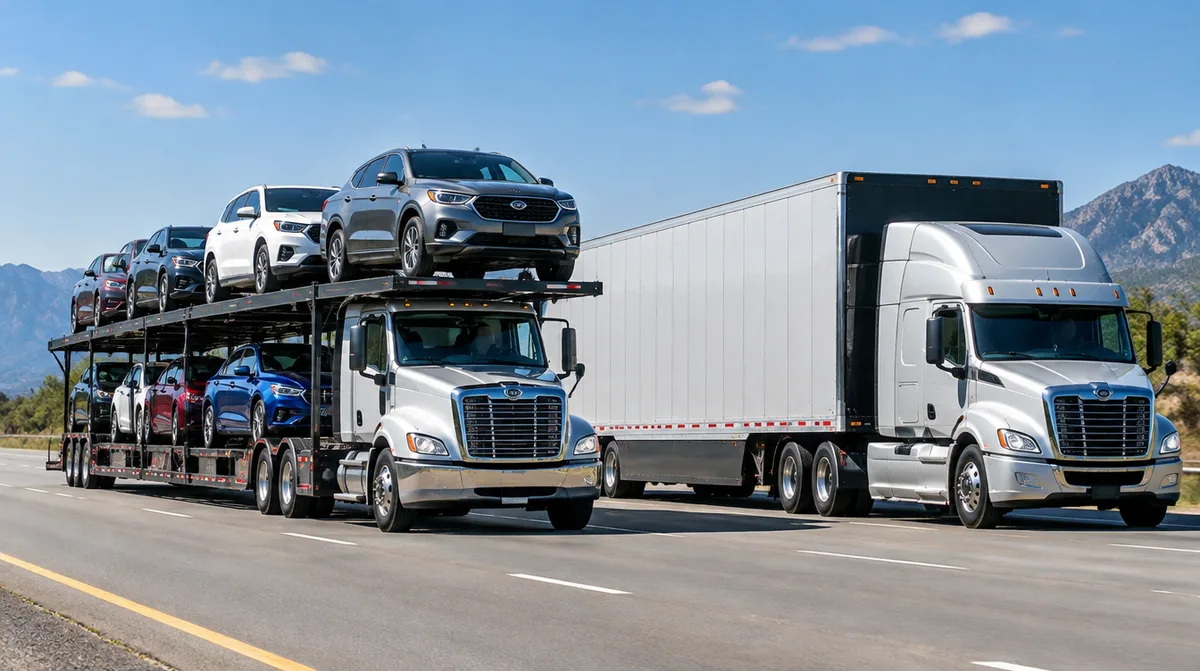
Two ways to move a car
Most vehicles travel on open carriers, the multi-car trailers you often see on highways. Others travel in enclosed carriers that cover the vehicle on all sides.
Open transport
- Lower price and the widest availability
- Faster pickup on most routes because there are more open trucks
- Exposure to weather, dust, and road debris, which is the same exposure your car sees when you drive it
Enclosed transport
- Protection from rain, hail, sun, and debris
- Softer loading options for low-clearance cars
- Higher cost, often 40 to 60 percent more, and fewer trucks, so scheduling can take longer
Insurance differences
Both types of carrier are expected to carry cargo insurance, but limits vary. Enclosed carriers frequently carry higher limits because they haul higher-value vehicles. Ask for a copy of the certificate of insurance and confirm what is and is not covered, including personal items inside the car.
How to choose
- Daily driver or moving a normal vehicle: open transport is usually fine.
- Classic, exotic, or newly restored car: consider enclosed.
- Long winter routes through snow and salt: enclosed may be worth the extra cost.
- Tight budget: open, with a flexible pickup window.
Whichever you pick, inspect the car at pickup and delivery and note any damage on the bill of lading.
This guide is general information, not legal or financial advice. Figures are illustrative estimates, not quotes. Always request a written quote before you book.